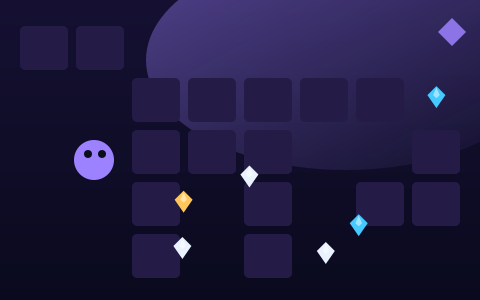
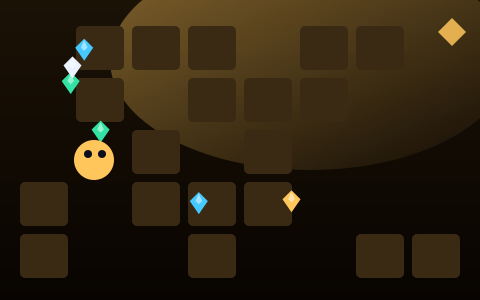
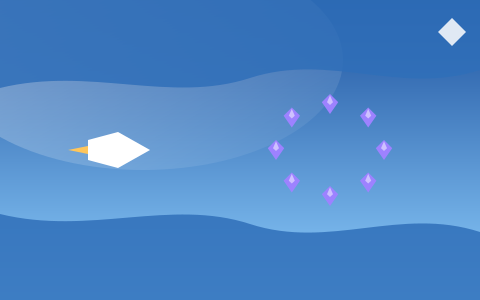
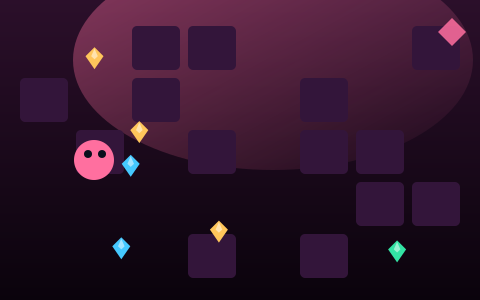
About Underwater Crystal Quest
Underwater Crystal Quest is the slowest and calmest game on the site. Movement is 205 pixels per second — the lowest of any game here — and the diver glides for a moment after you release the controls, which gives everything a heavy, buoyant feel.
That heaviness is the design. Reef corridors twist more than our cave layouts, and a diver that glides cannot take a corner the way a character that stops instantly can. Turning well means easing into the turn rather than arriving at it, which makes a game with no fast enemies and a generous clock into something that still requires attention.
Only a quarter of the crystals are hidden, less than in our other treasure games, because the reef layouts themselves already make finding things slow. It sits at the easy tier and is the gentlest introduction to the treasure category.
How to play Underwater Crystal Quest
Objective
Collect every crystal in the reef before the dive timer expires, then descend to a larger reef.
Keyboard
- ↑ ↓ ← → / WASD — Swim in any of eight directions
- P / Esc — Pause and resume
- M — Mute or unmute
- R — Restart once the run is over
Touch
- Direction buttons — Swim through the reef
- Drag on the play area — Steer toward your finger
- Tap the play area — Start the run from the ready screen
What to avoid
Unstable energy orbs among the coral, rock spikes, and two reef drifters that follow their own routes through the passages.
How to collect gems in Underwater Crystal Quest
Swim into crystals to collect them. A quarter of them are buried in coral and reveal when you come within about two and a half tiles. Because the diver glides, collecting a tight cluster means approaching it at an angle that lets you drift through rather than stopping in the middle of it — a habit that is worth learning here, where the clock is forgiving, before taking it into the faster treasure games.
Crystals
Worth 15 points. Usually laid out in trails and arcs rather than singly.
Gems
The standard collectible, worth 10 points before your multiplier. The backbone of every streak.
Jewels
Worth 25 points. Hexagonal, and usually placed just past an obstacle.
Treasure
Worth 35 points. Bar-shaped treasure gems mark a route worth a detour.
Power-ups
Gem Magnet
Pulls nearby gems toward you for eight seconds, so you can hold a streak through an awkward gap.
Speed Boost
Increases your movement speed for six seconds. Faster routes, but less time to read what is ahead.
Shield
Absorbs one collision. Your run and your collection streak both survive the hit.
Gem Vacuum
Sweeps up every gem in a wide radius automatically for five seconds.
Scoring and combos
Base value times your combo multiplier, plus 300 for clearing a reef and fifteen points for every second still on the clock. The clock is 110 seconds — the most generous on the site — so most players clear early levels with a substantial time bonus, which is a deliberately encouraging start.
Every five gems collected in a row raises your multiplier by one, to a ceiling of five times. A missed gem or an unshielded hit sends it straight back to one. Twenty gems collected as one unbroken chain is worth roughly three times the same twenty gems collected with breaks in between.
Standard streak rules. With slow drifters and no fast hazards, an unbroken chain across an entire reef is realistic on a first attempt, and that makes this the second-best game here (after Sky Gem Collector) for actually feeling what a sustained five-times multiplier does to a score.
Difficulty
Easy. Movement at 205 pixels per second with a glide, a 110-second clock, two slow drifters and a low hazard density. Each reef adds passages and a drifter, and the clock tightens, but the pace never becomes reactive. The generated reefs are wider than our cave layouts, which suits a diver that cannot stop quickly.
Tips for a better score
- Ease into turns. The diver glides, so arriving at a corner at full speed carries you into the coral.
- Approach clusters at an angle that lets you drift through them rather than stopping inside them.
- The drifters follow passages and never chase you. Learn a route and cross behind them.
- Take the speed power-up early. In a search game, speed is coverage — and it partly offsets the glide.
- Bubbles rise from the diver constantly; use them as a peripheral cue for which way is up on the wider reefs.
- If a reef is nearly clear, check the wide chambers you swam straight through. Buried crystals sit against the coral walls.
Features
- Gliding underwater movement with genuine momentum
- Generated reef layouts, wider than our cave networks
- A quarter of the crystals buried in coral
- Two slow reef drifters with non-homing routes
- The most generous clock on the site at 110 seconds
- Four power-ups: Gem Magnet, Speed Boost, Shield and Gem Vacuum
- Local best score, crystal count and streak saved in your browser
- Direction buttons and drag-to-steer on touch devices
Frequently asked questions about Underwater Crystal Quest
Why does the diver keep moving after I let go?
Water. The diver glides for a moment after you release the controls, which is what makes turning a matter of easing rather than stopping. It is the slowest and heaviest movement on the site.
How much of the treasure is hidden?
About a quarter, less than in our other treasure games. The reef layouts already make finding things slow, so hiding more would have made the levels tedious rather than challenging.
Do the reef drifters chase me?
No. They follow passages and turn at coral walls on their own routes. Learning one route is enough to cross behind it safely every time.
Is this a good first treasure game?
Yes. It is the easy tier with the most generous clock on the site, and the pace never becomes reactive. Crystal Cave Collector and Treasure Tunnel are the medium-tier steps up.
What are the bubbles for?
They rise constantly from the diver and serve as a peripheral orientation cue on the wider reefs, where it is easy to lose track of which way you were heading.