




Why gem collection games are fun
Collecting is one of the oldest ideas in arcade games, and it survives because it does something very few mechanics do: it turns movement itself into a reward. In a pure dodging game, moving well earns you nothing but the absence of failure. Add collectibles and every good decision pays out immediately, in a sound, a number and a visible change to your score.
The second reason is that a gem is a legible goal. You never have to read a tutorial to understand that the shiny thing is worth taking. That clarity is why collection games work as five-minute browser games: the objective explains itself in the first second, and the depth comes from how the gems are arranged rather than from rules you have to learn.
The third reason is the streak. A single gem is a small reward. Twenty gems in a row with a multiplier climbing behind them is a story — one you can lose at any moment. That tension between banking what you have and reaching for one more is the engine underneath every game on this site.
Instant feedback
Every collected gem answers immediately with a sound, a particle burst and a number. You always know exactly why your score moved.
Risk you choose
High-value gems sit in awkward places on purpose. Taking them is always a decision, never an accident.
Recoverable mistakes
A broken streak costs you a multiplier, not your run. There is always a reason to keep playing.
How gem collection arcade games work
Every game here is built from the same four systems, which is why a technique you learn in one game transfers to the next.
1. The collectible system
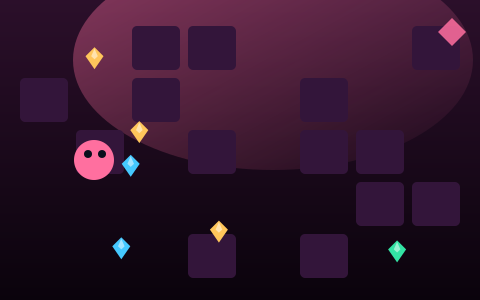
Eight gem types, each with a fixed base value and a distinct shape and colour: plain gems (10 points), crystals (15), energy stones (20), jewels (25), treasure gems (35), diamonds (50), bonus crystals (40) and rare gems (100). They are placed in deliberate patterns — lines, arcs, zig-zags, waves, clusters, rings and trails — rather than scattered at random, because a pattern is an instruction about where to move.
2. The combo system
Collect five gems in a row and your multiplier goes to two. Five more and it goes to three, up to a ceiling of five. Miss a gem or take an unshielded hit and it drops straight back to one. Your score is the sum of each gem’s value multiplied by whatever your multiplier was at the moment you touched it.
3. Obstacles and hazards
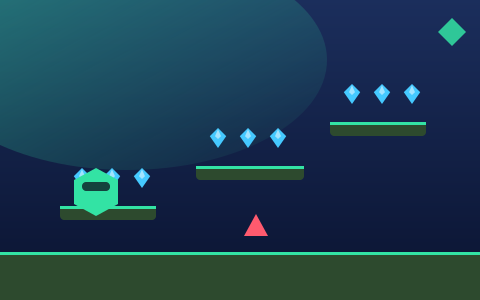
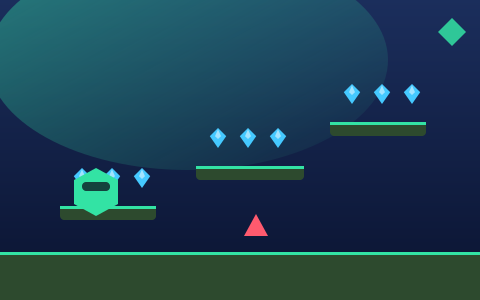
Six hazard silhouettes recur across all thirty games: spikes, spinning cutters, blinking beams, patrolling drones, tumbling boulders and toothed crushers. Each one telegraphs before it becomes dangerous, and deadly collisions use a slightly inset hitbox so a near miss reads as a near miss.
4. Power-ups
Six power-ups change how you collect rather than simply adding points: Gem Magnet, Gem Multiplier, Shield, Speed Boost, Gem Vacuum and Bonus Trail. Not every game uses all six — a couple deliberately use none.
Gameplay tips that work everywhere
- Protect the chain. Once your multiplier reaches five, skipping a single awkward gem is almost always cheaper than resetting from one.
- Move earlier than feels necessary. Committing a fraction of a second early costs nothing and saves runs once speed climbs.
- Read patterns, not gems. Pick the line that intersects the most gems with the fewest direction changes, then follow it.
- Watch a hazard for one cycle. A second spent learning a patrol beats a guess that ends the run.
- Save the shield. Spend it on the section you know you find hardest, not on the first obstacle you meet.
- Restart early. A run that has already lost its streak in the opening seconds is worth abandoning.